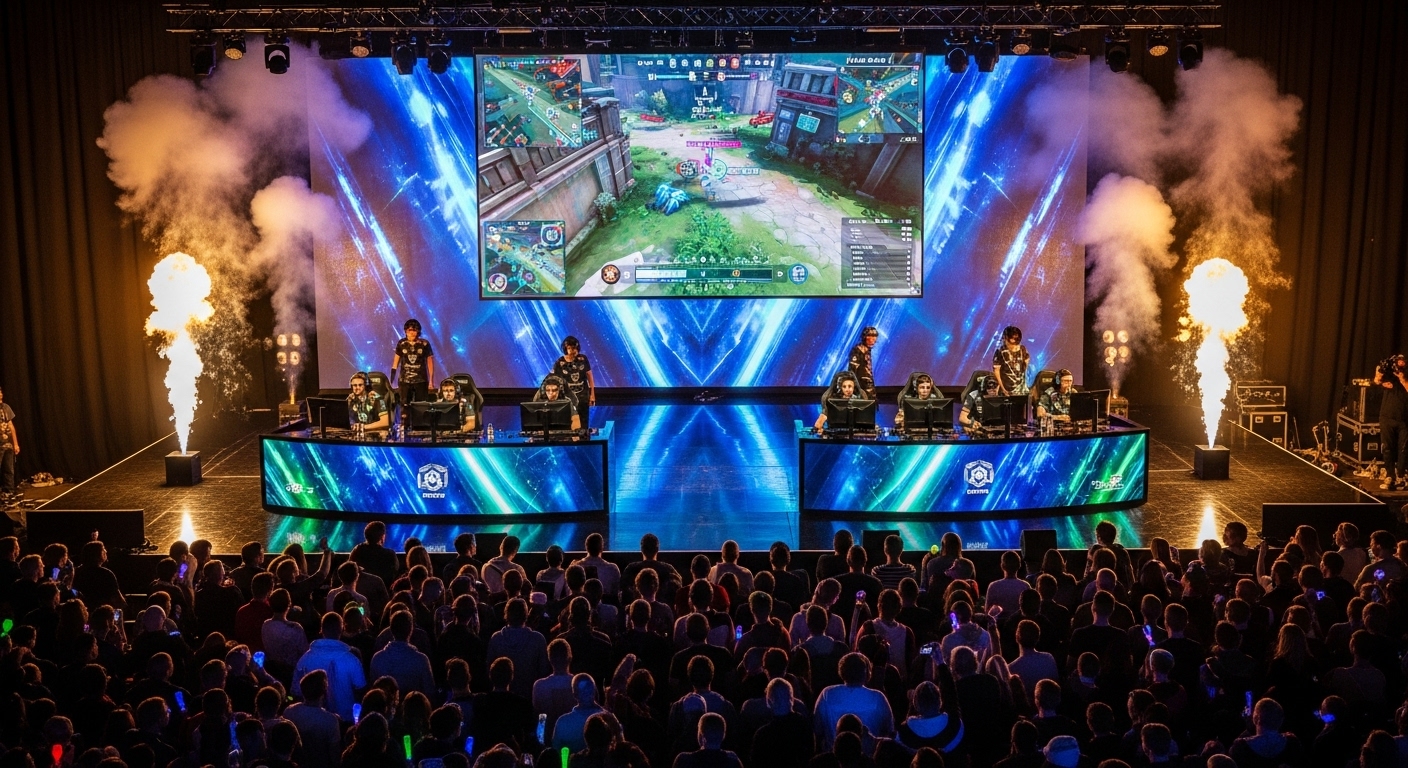

Introduction: The Emergence of Esports
Over the past two decades, esports has evolved from a niche interest to a global powerhouse, captivating millions of viewers and players across the world. Competitive video gaming, or esports, is now a multi-billion-dollar industry that rivals traditional sports in terms of viewership, sponsorships, and global influence. What began as a hobby for enthusiasts has transformed into a legitimate career for professional players, commentators, coaches, and analysts. The rise of esports has been swift, and its trajectory shows no signs of slowing down.
This blog explores the journey of esports, its current impact on entertainment, and its future potential. Through examining its origins, growth, and the factors that contribute to its success, we’ll gain insight into why esports is poised to shape the future of entertainment and sports culture.
The Origins of Esports: From Casual Play to Organized Competitions
Esports didn’t appear overnight. Its origins can be traced back to the early days of computer gaming in the 1970s and 1980s. The first significant gaming competition, the “Space Invaders Championship” in 1980, set the stage for organized video game tournaments. However, esports truly began to take shape in the 1990s when multiplayer games like “WarCraft,” “Quake,” and “StarCraft” allowed players to compete against each other online.
One of the key milestones in esports history was the development of competitive leagues. In South Korea, the popularity of “StarCraft” led to the establishment of professional gaming leagues and television broadcasts dedicated to esports. This became a cultural phenomenon, and South Korea became the epicenter of competitive gaming. Esports events such as the “StarCraft Pro League” and “League of Legends World Championships” laid the foundation for modern esports as we know it today.
By the early 2000s, major tournaments like the “World Cyber Games” and “Major League Gaming” (MLG) in the United States attracted players and viewers from all over the world. The success of these tournaments demonstrated that there was a growing audience for competitive gaming. These events also provided a glimpse into the potential of esports to become a global industry.
The Growth of Esports: A Global Phenomenon
The real breakthrough for esports came in the 2010s, when the advent of streaming platforms like Twitch, YouTube Gaming, and Facebook Gaming revolutionized the way fans consumed esports content. These platforms allowed fans to watch live streams of competitions and follow their favorite players, creating an interactive and immersive experience. This shift to digital media was a game-changer for esports, as it provided unprecedented access to global audiences.
Tournaments like the “League of Legends World Championship” and “The International” for “Dota 2” began drawing massive viewership, often surpassing traditional sports events in terms of online viewership. As esports tournaments became more professionally organized, with higher production values and larger prize pools, they started to gain the attention of sponsors, media outlets, and major brands.
The growth of esports was further accelerated by partnerships with mainstream sports organizations. Teams from traditional sports leagues such as the NBA, NFL, and football clubs in Europe began to invest in esports, establishing their own teams and leagues. This merger of traditional sports and esports helped elevate the latter’s status and legitimacy within the global sports ecosystem.
The Appeal of Esports: Why It’s Capturing the World’s Attention
One of the main reasons esports has become so popular is its accessibility. Unlike traditional sports that often require physical training, special equipment, and specific infrastructure, esports can be enjoyed with a simple gaming console, a computer, and an internet connection. This level of accessibility has made esports incredibly popular among younger generations who are already immersed in the digital world.
Additionally, the variety of games available in esports appeals to a broad spectrum of players and viewers. From first-person shooters like “Counter-Strike” and “Overwatch” to real-time strategy games like “StarCraft” and “Dota 2,” the diversity in genres ensures there is something for everyone. Competitive gaming provides the opportunity to test skills against opponents, which is a universal appeal for both casual and professional players alike.
Esports also benefits from a highly engaged and passionate fanbase. Fans are not just spectators; they are active participants in the esports community, supporting players, teams, and events through social media, streaming platforms, and fan-driven initiatives. The social aspect of esports, combined with its entertainment value, has created a unique form of digital fandom.
The Professionalization of Esports: More Than Just a Game
In the early days, esports was seen as a hobby or a pastime. However, as the industry has grown, it has become a legitimate profession for players and support staff. Today, professional esports players train rigorously to compete at the highest level, dedicating hours to perfecting their gameplay, refining their strategies, and staying ahead of the competition.
Professional gaming has become a career, with players earning substantial incomes through tournament prize money, sponsorships, streaming revenues, and brand partnerships. The top players in esports, such as “N0tail” from “Dota 2” and “Faker” from “League of Legends,” have become household names, earning millions of dollars in winnings and endorsement deals. The role of a professional gamer is now viewed as a respected career path, with opportunities for growth within the esports ecosystem.
But it’s not just the players who are making a living in esports. Coaches, analysts, team managers, broadcasters, and event organizers also play vital roles in the esports ecosystem. These positions are integral to the success of esports teams and tournaments, and many individuals have found rewarding careers in these areas. The growth of esports has also led to the development of educational programs and degrees focused on esports management, broadcasting, and game development.
Esports as a Business: The Revenue Model Behind the Industry
Esports is no longer just about the players and tournaments—it has become a thriving industry with multiple revenue streams. The esports business model is complex, encompassing sponsorships, advertising, ticket sales, media rights, merchandise, and even ticketed live streams. According to industry reports, esports will generate billions of dollars in revenue by the mid-2020s.
Sponsorships are one of the most significant sources of revenue for esports organizations. Companies like Intel, Coca-Cola, and Red Bull have all invested heavily in esports, sponsoring teams, players, and tournaments. The connection between gaming and tech brands is especially strong, as companies like Alienware, Logitech, and Nvidia partner with esports events to promote their products to tech-savvy audiences.
In addition to sponsorships, streaming platforms like Twitch and YouTube have revolutionized the way fans engage with esports content. Streamers and content creators generate revenue through advertisements, paid subscriptions, and donations from their fans. Top streamers can earn substantial sums from these sources, with some players reaching celebrity status and gaining millions of followers.
Media rights, where networks and streaming platforms purchase the broadcasting rights to major esports events, also contribute to the revenue model. The increased viewership and popularity of esports have made it an attractive investment for media companies looking to tap into the rapidly growing digital audience.
The Global Reach of Esports: Bridging Cultures and Communities
Esports is unique in its ability to unite people across cultures and continents. With the advent of online multiplayer games, players from different countries and regions can compete in tournaments without leaving their homes. This global connectivity has allowed esports to become a truly international phenomenon.
Esports events like the “League of Legends World Championship” and “The International” bring together players from all over the world to compete for prestigious titles and prize money. Fans can watch these events online, regardless of their geographic location, creating a global community of esports enthusiasts. The shared love for the games transcends borders, uniting people with different backgrounds and languages.
Esports has also helped bring attention to digital platforms in regions with growing internet access. Countries in Southeast Asia, Latin America, and Africa are experiencing a boom in esports popularity, as local players and teams rise to prominence in global tournaments. As internet infrastructure improves in emerging markets, esports is expected to continue its global expansion.
Esports and Traditional Sports: A New Era of Competition
While esports began as a separate entity, it has gradually integrated with traditional sports in recent years. Traditional sports teams, leagues, and brands have increasingly recognized the value of esports as a marketing tool and a way to engage younger audiences. The NBA’s involvement in the “NBA 2K League” and NFL’s investment in esports teams show that traditional sports are embracing the digital revolution.
This collaboration has led to new types of hybrid events that blend elements of traditional sports and esports. For example, major sports events are now often paired with esports tournaments, and many professional athletes have also begun to invest in esports teams. The fusion of traditional and digital competition is changing the way fans experience both worlds.
The Future of Esports: What Lies Ahead?
The future of esports looks incredibly promising. As technology continues to advance, esports will likely become even more immersive, with virtual reality (VR) and augmented reality (AR) playing a role in the next phase of competition. The possibility of virtual esports arenas and interactive fan experiences will likely redefine how we engage with live events.
Additionally, as esports continues to grow, its legitimacy within the global sports landscape will only increase. We may see esports included in major sporting events such as the Olympic Games or the Asian Games, cementing its place in the mainstream. With increasing viewership, sponsorships, and professional leagues, esports is on track to become one of the dominant forms of global entertainment.